Outdoor Living Space Tips & Info | Parkland, FL
Pool Deck Pavers in Parkland That Help Reduce Slippery Surfaces
Most Parkland homeowners think pool pavers are just about looks. Pick something pretty, lay it down, call it done. But wet feet on smooth stone? That's where lawsuits start — and backyard parties end badly. The right paver doesn't just frame your pool. It keeps people upright when water's everywhere and kids are running faster than they should.
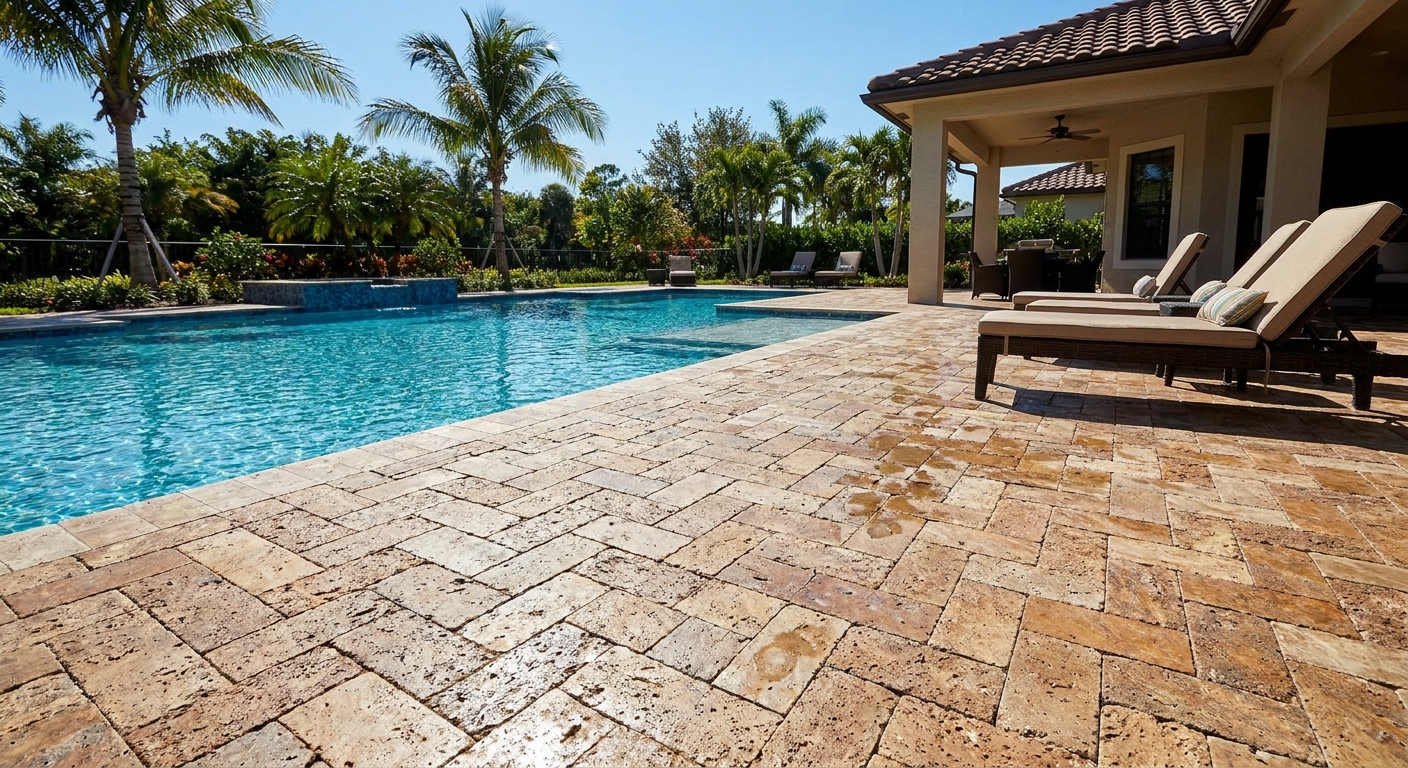
So here's what matters. If you're building or upgrading a pool deck, traction isn't optional. Every surface choice should account for splash zones, barefoot traffic, and Florida's relentless heat. Not every material grips when wet. And not every installer knows the difference between what looks good in a showroom and what actually performs poolside.
Wet Decks Turn Into Liability Fast
Pool areas stay damp. Splashing, rain, morning dew — moisture doesn't take a day off in South Florida. Combine that with polished surfaces and you've got a skating rink masquerading as a patio. We've seen too many families pick materials based on color swatches without asking the one question that actually matters: does this grip when it's soaked?
Parkland's outdoor lifestyle means your deck gets used hard. Cookouts, pool parties, late-night swims — if the surface can't handle wet feet at speed, someone's hitting the ground. And when that happens, the paver choice stops being about design and starts being about damage control.
Materials That Actually Grip
Not all pavers are created equal. Some are built to handle water. Others just pretend. If you want a deck that doesn't turn into a hazard every time someone cannonballs, you need to know what works — and why it works.
Here's what we recommend for Parkland pools where safety isn't negotiable:
- Travertine: Natural stone with built-in texture and drainage. Water doesn't pool on it, and it stays cool even when the sun's cooking everything else.
- Textured concrete: Stamped or broom-finished surfaces grab wet feet. Affordable, customizable, and way safer than smooth poured slabs.
- Porcelain with grip finish: Modern tiles engineered for slip resistance. They look sleek but perform when wet, and they don't fade under UV assault.
- Coral stone: Rough texture straight from nature. Light color keeps it cool, and the surface texture is aggressive enough to handle splashing without becoming a slip zone.
- Rubber pavers: Soft landing for families with young swimmers. Cushioned, slip-proof, and forgiving when falls happen anyway.
- Brick pavers: Classic rough surface that's been working for decades. Available in endless patterns and delivers reliable traction without fuss.
What Separates Safe From Sorry
Picking a paver isn't about grabbing what's on sale or what your neighbor installed. It's about understanding which features actually prevent slips when your deck is under real-world conditions — wet, busy, and barefoot.
Focus on these elements when you're comparing options:
- Surface texture: Rough beats smooth every time. If it feels slick in your hand, it'll be worse underfoot when wet.
- Drainage capability: Porous materials let water escape instead of sitting on top. Puddles are slip magnets.
- Heat resistance: Light colors and reflective materials stay cooler, which means less hopping around and fewer chances to lose footing.
- Durability under abuse: Pool chemicals, UV rays, and constant moisture will destroy weak materials. If it breaks down, it gets slick.
Installation Isn't Where You Cut Corners
Even the best paver fails if it's laid wrong. Improper grading, bad jointing, or skipped drainage planning can turn a slip-resistant material into a dangerous surface. We've walked too many decks where expensive stone was installed by crews who didn't understand poolside requirements.
Work with installers who know Parkland's climate and how water behaves around pools. Proper slope, joint spacing, and base prep aren't optional. And if you're sealing your pavers, make sure it's a non-slip formula. Glossy sealers look great in photos and terrible in injury reports.
Maintenance Keeps Traction Working
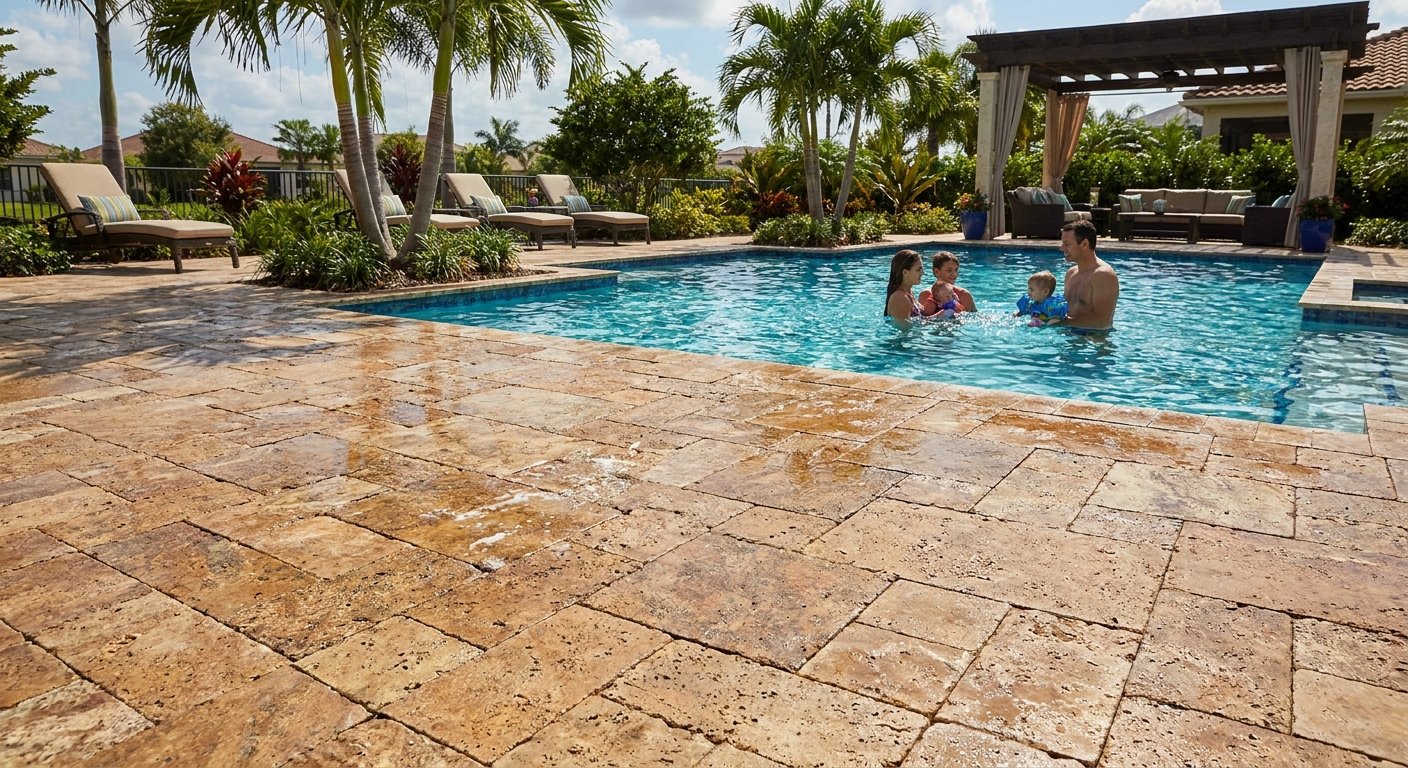
Your pavers won't stay slip-resistant on their own. Algae, mold, and dirt build up in Florida's humidity, and all three turn textured surfaces into slick nightmares. Regular cleaning isn't about aesthetics — it's about keeping the grip you paid for.
Here's what keeps your deck functional year after year:
- Pressure wash or scrub surfaces monthly to remove organic buildup
- Clear debris from joints and drainage channels so water moves off the deck
- Reapply non-slip sealer as recommended by the manufacturer, not when it looks dull
- Inspect high-traffic zones for wear and address smoothing before it spreads
Common Mistakes That Cost More Than Money
Most slip-related problems trace back to decisions made before installation. Choosing style over function. Skipping the texture conversation. Trusting a contractor who's never worked around water. These aren't small oversights — they're liabilities waiting to happen.
Here's where Parkland homeowners trip up most often:
- Prioritizing appearance over grip: Polished stone photographs beautifully. It also sends people to urgent care when wet. If it looks too smooth, it probably is.
- Ignoring drainage during layout: Water needs somewhere to go. If your deck doesn't slope away from the pool, puddles form and traction disappears.
- Using indoor materials outdoors: Not every tile is rated for wet, high-traffic exterior use. Interior-grade pavers fail fast around pools.
- Skipping professional advice: DIY installation saves money until someone slips. Then it costs far more than hiring a pro ever would have.
Safety Doesn't Mean Sacrificing Style
Nobody wants a pool deck that looks like a warehouse floor. The good news? Slip resistance and curb appeal aren't mutually exclusive. Travertine delivers elegance. Textured concrete offers endless design flexibility. Porcelain brings modern clean lines. All of them can be gorgeous — and all of them can keep your guests upright.
The key is deciding what matters most before you're comparing samples. If you start with safety as the baseline requirement, you'll still have dozens of attractive options. Start with looks and hope for traction? That's when compromises get dangerous.
Your Deck Should Work as Hard as It Looks
Building a pool deck in Parkland means accounting for water, heat, and constant use. The pavers you choose either handle that reality or they don't. There's no middle ground when someone's walking across your deck with wet feet and no shoes.
We help homeowners pick materials that perform — not just on installation day, but years down the line when the deck's still packed with people and soaked with pool water. Slip resistance isn't a luxury feature. It's the foundation of a pool area that actually works. Choose pavers that grip, install them right, and maintain them like you mean it. For complete outdoor services that extend beyond just pool decks to include driveways, outdoor kitchens, and pergolas, everything else is just decoration.
Ready to Make Your Pool Deck Safer?
Let's create a pool deck that looks great and keeps everyone on their feet, no matter how wet things get. If you're ready to upgrade your outdoor space with pavers that truly perform, give us a call at 305-951-8862 or get a quote today and see how we can help you enjoy your backyard with confidence.
‹ Back
Recent Posts
-
-
-
Outdoor Kitchens in Parkland That Work Well in Backyards
June 10, 2026
-